Your Next Customer Is Already Searching. Can They Find Your Business?
Every day, potential customers turn to Google to find products, services and professionals who can meet their immediate needs. Someone may search for "accountant near me," "commercial cleaning company nearby," or "website development services in California." These searches represent opportunities for businesses that appear at the right time with relevant solutions.
But what happens when your competitors appear in search results and your business does not?
Even with a professionally designed website and quality services, your company could miss enquiries simply because customers cannot find it when they need it.
Google Ads for local businesses provides a way to compete for this valuable visibility. Through targeted advertisements, businesses can reach people actively searching for products or services, rather than depending entirely on customers finding their websites naturally.
Professional Google Ads services can support lead generation by connecting suitable searches with relevant advertisements and useful website pages. Whether you are looking for phone calls, quotation requests, consultations or online orders, the right campaign strategy can create opportunities to turn search traffic into enquiries.
However, successful Google Ads lead generation requires more than choosing popular keywords and setting an advertising budget. It involves understanding customer needs, selecting appropriate locations, communicating your services clearly and measuring meaningful actions.
At Opal Infotech INC, our experienced professionals offer Google Ads management and PPC advertising services to help local businesses, B2B companies, eCommerce owners and professional service providers approach paid advertising with a clear business objective.
Why “Near Me” Searches Create Valuable Business Opportunities
When customers include "near me" or a specific location in their searches, they are often looking for a provider who can serve their requirements within a particular area.
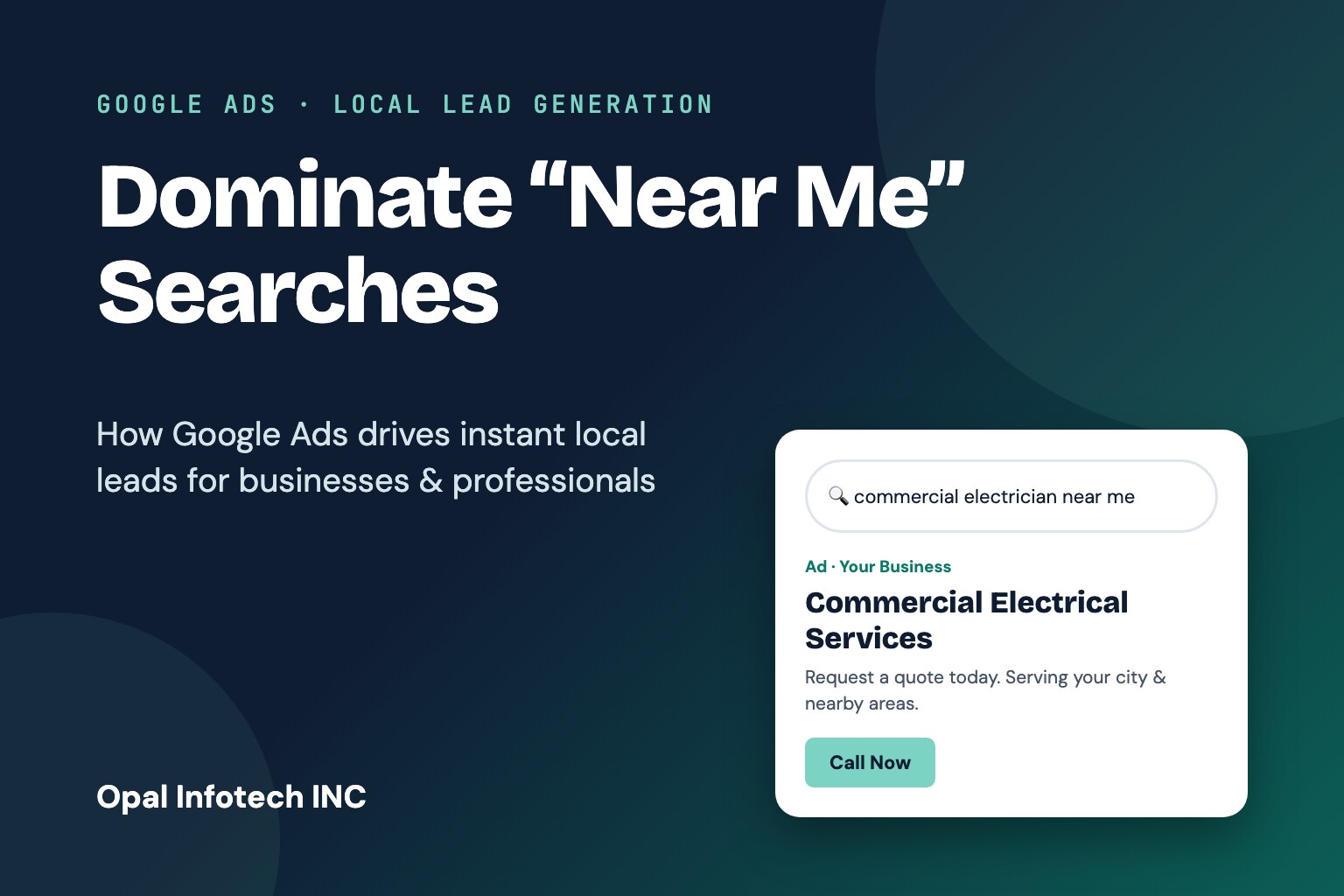
For example, someone searching for "office electrical maintenance" may be gathering information. In contrast, a search for "commercial electrician near me" may indicate that the person wants to identify available service providers.
This difference is important because not every website visitor has the same intention.
Local Searches Often Begin with a Specific Need
Customers searching for nearby services may already know what they require. They could be comparing providers, looking for contact information or preparing to request a quotation. Common examples include:
- "Accounting services near me"
- "Commercial plumbing company in San Jose"
- "Business IT support nearby"
- "Industrial equipment repair in California"
- "Professional tax consultant near me"
These searches help businesses understand how potential customers describe their requirements.
Customers Do Not Always Type “Near Me”
Location-based searches also include city names, service areas and regional terms. In some cases, Google may use location-related signals to show relevant results even when the search does not include a geographical phrase.
Therefore, effective local advertising should consider different ways customers search rather than depending on one keyword. For businesses serving selected cities or regions, this creates an opportunity to align advertisements with their actual service coverage.
How Google Ads Connects Your Business with Potential Customers
Google Ads allows businesses to promote their services through paid advertisements that may appear when people search for relevant terms.
For example, imagine that you operate a commercial air-conditioning maintenance company. A facility manager searches Google for "commercial AC repair near me" and sees an advertisement explaining the services your company provides. If the advertisement matches the requirement, the customer can visit your website, review your capabilities and contact your team.
This process allows businesses to reach potential customers at a moment when their services may already be needed.
Target Searches Related to Your Services
Google Search Ads can help businesses advertise for searches connected to specific offerings. An accounting firm, for instance, may focus on commercial tax preparation, bookkeeping or business financial consulting rather than advertising to everyone looking for general financial information.
This helps create a clearer relationship between what the customer wants and what the business offers.
Support Different Business Objectives
A Google Ads campaign can be structured around actions relevant to the company, including:
- Phone calls from potential customers.
- Consultation and appointment requests.
- Completed website enquiry forms.
- Requests for pricing or quotations.
- Online product orders.
The objective is not simply to generate website visits. Instead, businesses should encourage interactions that can lead to meaningful customer relationships.
Want Your Business to Appear for More Relevant Google Searches?
Opal Infotech INC can help you evaluate your advertising opportunities and develop campaigns around your services, target markets and lead generation goals.
Talk to Our Google Ads TeamWhy Your Competitors May Be Receiving the Enquiries You Miss
Many businesses invest considerable effort in developing their services and websites but remain disappointed with the number of online enquiries they receive. Often, the challenge is not the quality of their offering. It is the gap between what customers search for and how the business presents itself online.
Limited Visibility for Relevant Searches
Your competitors may be advertising for services that your business also provides. If customers repeatedly encounter those advertisements during their research, competing providers have more opportunities to introduce their services.
Paid advertising can help your company compete for relevant search visibility without depending exclusively on its position in unpaid search results.
Unclear Website Information
Even if customers reach your website, they need to understand your offering quickly. A website that uses complicated language, hides essential information or lacks visible contact options may discourage enquiries.
For instance, an industrial supplier should make its product categories and quotation process easy to find. A professional consultant should clearly communicate the type of assistance offered.
Advertising Without a Clear Customer Focus
Some campaigns attract clicks from people who are unlikely to become customers. This may happen when advertisements use overly general search phrases or target locations that do not match the company's business area.
As a result, evaluating customer relevance is just as important as increasing traffic.
From Google Search to Customer Enquiry: Understanding the Journey
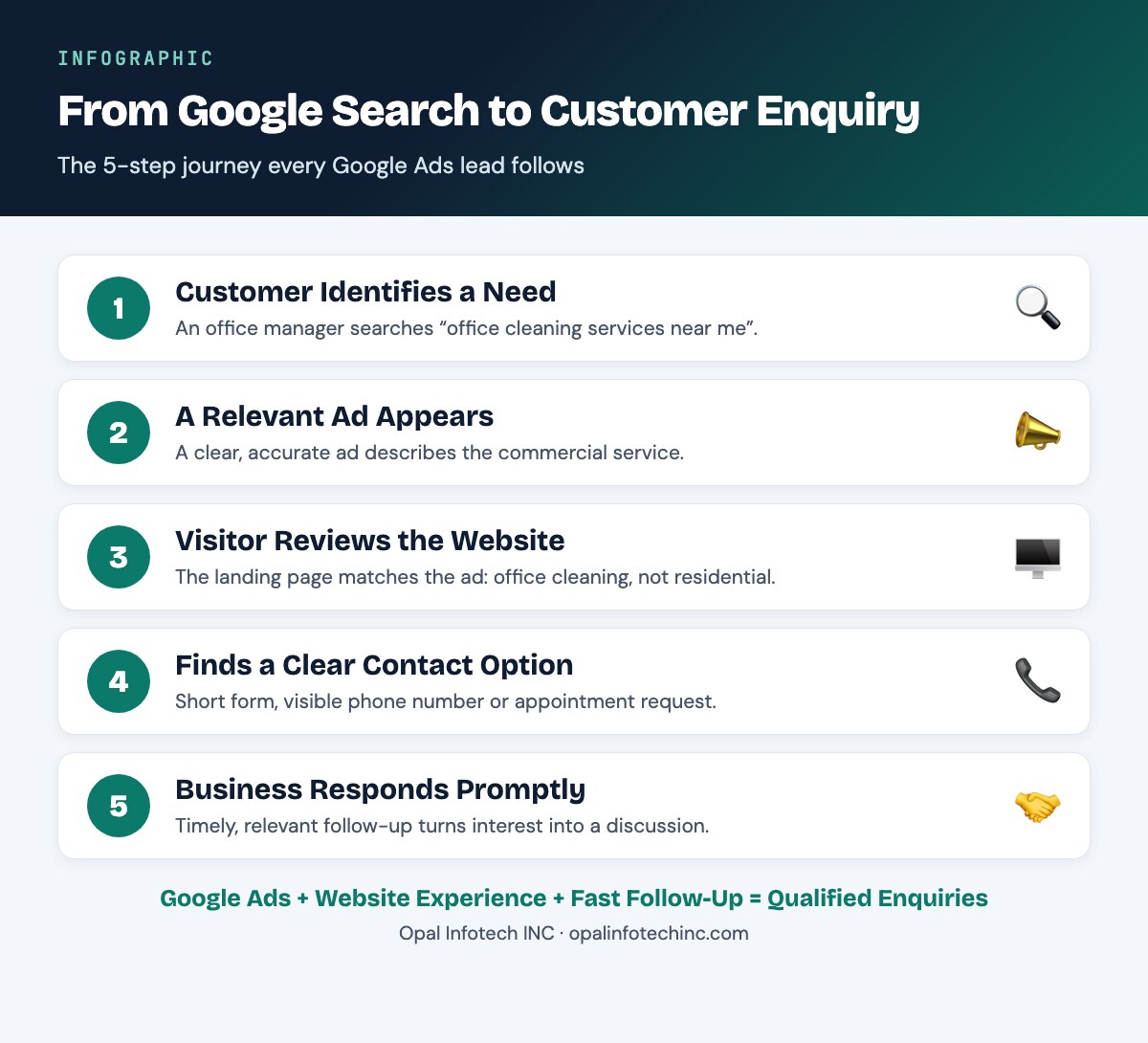
Generating enquiries involves several connected steps. Each one influences whether a potential customer moves forward.
Step 1: The Customer Identifies a Requirement
Consider an office manager who needs a reliable commercial cleaning provider. They search for "office cleaning services near me" because they want to find businesses capable of handling the job.
Step 2: A Suitable Advertisement Appears
A relevant Google advertisement can introduce a cleaning company, describe its commercial service and encourage the customer to visit its website. The advertisement should explain the offering accurately rather than relying on exaggerated promises.
Step 3: The Customer Reviews the Website
After clicking, the visitor should reach a page that provides information matching the advertisement. For example, a commercial cleaning advertisement should lead to details about office or workplace cleaning rather than unrelated residential services.
Step 4: The Visitor Finds a Clear Contact Option
The website should make it straightforward to ask questions, request pricing or arrange a discussion. Useful contact options may include a short form, visible telephone number or appointment request facility.
Step 5: The Business Responds
A submitted enquiry is an opportunity, not a completed sale. Timely communication, relevant answers and an appropriate follow-up process can help convert interest into a business discussion.
This is why Google Ads, website experience and enquiry handling should work together.
How to Reach Relevant Customers Without Wasting Your Advertising Budget
One of the most common questions business owners ask is whether Google Ads will produce worthwhile results for the amount they invest. While campaign performance cannot be guaranteed, thoughtful planning can help reduce avoidable spending.
Choose Keywords Based on Customer Requirements
The most useful search phrases are not always the broadest. A company supplying industrial water-treatment systems, for example, may benefit from searches for commercial RO plants or industrial water-treatment equipment rather than general questions about household water filters.
Specific phrases can better reflect what the business actually sells.
Target Locations That Match Your Market
Google Ads provides location-targeting options that allow businesses to select geographical areas relevant to their operations. A local repair company may focus on nearby cities, while a regional B2B provider may target several industrial markets.
Importantly, some location settings can include people who have shown interest in a geographical area, even if they are not physically there. Businesses should therefore review these settings according to their needs.
Avoid Searches Unrelated to Your Business
Campaigns can use exclusions to reduce advertising for unsuitable search terms. For example, a commercial equipment supplier may want to avoid some consumer-oriented searches that do not match its products. Reviewing search activity helps identify where adjustments may be useful.
Match Spending to Business Priorities
Rather than advertising every service immediately, companies can begin with offerings that have clear commercial importance. The budget should reflect customer demand, competition, service value and the company's ability to respond to enquiries.
As campaign information becomes available, advertising priorities can be reassessed.
Unsure How to Allocate Your Google Ads Budget?
Discuss your business requirements with Opal Infotech INC and identify which services and markets deserve attention first.
Discuss Your Advertising GoalsWhich Businesses Can Benefit from Location-Focused Google Ads?
Google Ads is relevant to different business models, but the approach should reflect how each audience searches and purchases.
Local Service Businesses
Cleaning companies, maintenance contractors, repair providers and other location-dependent businesses often need enquiries from customers within a practical service area. Google Ads for small businesses can support visibility for specific offerings and locations.
For example, an appliance repair business may promote services within the cities its technicians can reasonably cover.
Professionals and Consultants
Accountants, architects, legal professionals and business consultants often depend on enquiries from people looking for specialised assistance. Google Ads for professionals can help introduce these services to people searching for relevant support.
However, the website must also establish what the professional does, which clients they serve and how consultations can be requested. Some professional sectors have additional advertising requirements, which should be considered during campaign planning.
B2B Companies and Industrial Suppliers
Business-to-business customers usually have more detailed purchasing requirements. An industrial buyer looking for packaging machinery may want information about equipment suitability, production requirements, supplier capabilities and quotations before making a decision.
Therefore, a Google Ads for B2B businesses strategy should prioritise commercially relevant enquiries rather than general visitor volume.
eCommerce Website Owners
Online stores have different advertising requirements from locally delivered services. Google Ads for eCommerce may involve Search Ads, Shopping campaigns or other suitable formats, depending on the products and business objectives.
An online retailer's geographical targeting should consider delivery coverage, product availability and the markets it wants to serve. For eCommerce businesses, completed purchases, order value and advertising costs may provide more useful information than enquiry counts alone.
Why Your Website Plays an Important Role in Google Ads Success
Advertising can introduce your business to potential customers, but your website must provide the information needed to take the next step. A poorly organised website can discourage visitors even when the advertisement accurately matches their search.
Make the First Impression Relevant
Visitors should immediately understand which service they have reached. If someone clicks an advertisement for corporate website development, the destination should explain that service rather than requiring the visitor to search through unrelated company information. A relevant page helps maintain the customer's interest.
Explain Your Offering in Plain Language
Customers should be able to understand your services without knowing industry terminology. Clear headings, brief explanations, appropriate images and accessible contact details can improve the experience.
For technical B2B products, useful information might include applications, product categories and the process for requesting specifications.
Make Mobile Enquiries Convenient
Customers frequently access websites using smartphones. Your website should display clearly on mobile devices, provide readable information and make buttons and forms easy to use. Slow-loading pages or complicated enquiry processes may cause visitors to abandon their visit.
Build Confidence Before Asking for Contact
Customers may want to learn about your business before sharing their details. Accurate service descriptions, genuine company information, relevant project examples where available and clear contact options can help them make an informed decision.
Since Opal Infotech INC also provides website design and development services, businesses can consider both advertising and website improvements as part of a connected digital strategy.
Common Google Ads Mistakes That Can Reduce Lead Quality
Campaigns require appropriate planning and attention. Otherwise, businesses may spend money on traffic that does not support their objectives.
Targeting Too Broad an Audience
Advertising to locations or search categories outside your customer market may attract unsuitable visitors. Clear service definitions and geographical priorities can help keep campaigns focused.
Treating Every Click as a Success
A click indicates interest in an advertisement, but it does not confirm that the visitor needs your service. Businesses should evaluate enquiries and customer outcomes rather than focusing only on traffic totals.
Using Generic Advertisements
An advertisement that says little about the actual service may be less persuasive than one that communicates a specific offering. For example, a customer searching for commercial roofing services should be able to recognise that service in the advertisement.
Ignoring the Customer's Experience After the Click
A mismatch between the advertisement and its destination can cause confusion. Likewise, unclear pricing information, missing service details or difficult contact forms may discourage potential customers.
Failing to Review Campaign Performance
Customer behaviour, competition and business priorities change. Campaigns therefore benefit from regular assessment of search relevance, enquiry activity, expenditure and areas requiring improvement.
Avoiding these issues can help create more disciplined advertising decisions.
How Opal Infotech INC Approaches Google Ads Management
Selecting a Google Ads agency involves finding a team that understands the relationship between advertising activity and business objectives. An effective advertising strategy should begin with the customer's requirements, not simply a collection of popular keywords.
At Opal Infotech INC, our experienced professionals support businesses through Google Ads services backed by wider digital marketing and website expertise.
Understanding Your Business Goals
The first consideration is identifying what the business wants advertising to achieve. A local professional may want appointment requests, an equipment manufacturer may need qualified quotation enquiries, and an eCommerce company may prioritise online orders. These differences influence campaign planning.
Identifying Appropriate Search Opportunities
Understanding customer requirements helps determine which search terms and locations deserve consideration. For example, a B2B service provider may target particular commercial services in selected markets instead of pursuing unrelated, high-volume traffic.
Developing Relevant Advertising Messages
Advertisements should communicate the service clearly, reflect the customer's search and encourage an appropriate next step. Professional communication is particularly important for businesses selling specialised products or services.
Connecting Advertising with Website Experience
Relevant landing pages and accessible contact options can support the customer journey. Where website limitations are identified, improvements can be considered alongside advertising requirements.
Measuring and Reviewing Campaign Activity
Campaign information can help businesses assess which advertisements, searches and geographical markets are contributing to their objectives. Regular review provides a basis for adjusting campaign priorities and improving decision-making.
Our approach focuses on helping businesses pursue relevant advertising opportunities through planning, professional campaign management and meaningful performance evaluation.
How to Measure Whether Google Ads Is Delivering Business Value
Advertising performance should be assessed according to what matters to the business. A professional service provider looking for consultations will naturally measure success differently from an online retailer seeking product sales.
Number of Enquiries
Calls, contact forms, quotation requests and appointments can provide a starting point for evaluating lead-generation campaigns. However, not every enquiry will be equally valuable.
Quality of Enquiries
A qualified enquiry comes from someone whose requirement matches the company's services and market. For example, an industrial machine supplier may prefer one serious enquiry from a potential purchasing organisation over numerous requests for products it does not sell.
Cost Per Lead
Cost per lead represents the advertising expenditure associated with generating an enquiry. It can help businesses compare campaign activity, although the quality and commercial potential of those enquiries should also be considered.
Actual Business Outcomes
Where tracking and business records allow, enquiries can be connected with later outcomes such as quotations, confirmed appointments, orders or signed projects. This provides a clearer understanding of how advertising contributes to the sales process.
Decisions Based on Evidence
The purpose of reporting is not simply to produce numbers. Businesses should use performance information to identify useful opportunities, address weaknesses and decide where advertising investment may be most appropriate.
Frequently Asked Questions
1. How Quickly Can Google Ads Start Generating Leads?
Google Ads can provide paid search visibility after a campaign becomes eligible and begins serving. However, immediate leads are not guaranteed. Actual enquiries depend on customer demand, competition, budget, targeting, advertising messages and website experience.
2. Can Small Businesses Use Google Ads with a Limited Budget?
Yes. Small businesses can set budgets and focus campaigns on selected services or locations. A sensible starting budget depends on industry competition, business goals and the value of a potential customer.
3. Are Google Ads Suitable for B2B Businesses and Professionals?
Yes. B2B companies and professionals can use Google Ads to reach people searching for relevant services. Their campaigns may focus on consultation enquiries, quotation requests or other steps involved in a longer purchasing process.
4. Why Should Businesses Hire a Google Ads Management Company?
Professional management can help businesses plan campaigns, choose appropriate targeting, create relevant advertisements and interpret performance information. An experienced team can also provide guidance on website improvements and ongoing advertising decisions.
Turn Relevant Google Searches into Business Opportunities with Opal Infotech INC
Your potential customers may already be searching for the products, services and professional support your company provides. The opportunity lies in making your business visible through relevant advertisements and giving visitors a clear reason to contact you.
Whether you want to reach customers in nearby locations, attract enquiries from B2B buyers or promote products through your eCommerce website, your Google Ads strategy should reflect how your customers search and make decisions.
Opal Infotech INC brings professional advertising expertise together with an understanding of website performance and digital business requirements. Our experienced team helps businesses plan targeted Google Ads campaigns, evaluate advertising activity and identify opportunities to improve their online lead generation efforts.
Ready to Attract More Relevant Business Enquiries?
Discuss your Google Ads requirements with Opal Infotech INC and take the next step towards a more focused advertising strategy.
Contact Opal Infotech INC for Google Ads ServicesBeyond Google Ads management, Opal Infotech INC offers a comprehensive portfolio of digital services, including website design and redesign, web development across various platforms, AI SEO, Google paid campaign management, website maintenance, mobile app development and maintenance, AI chatbot development and AI integrations. Our team brings together digital marketing, website expertise and AI-driven solutions to help businesses strengthen their online presence, improve customer experiences and support their evolving digital requirements.